
Special Session
| Special Session 1: “Managing an IOT society, IOT techniques, and applications” Date: Thursday, 20 August 2015, 13:10~14:50 |
|
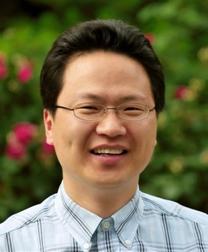
| Title: IoTivity: a new IoT open source and its full potential (Slide) Speaker: Dr. Soohong Park (Samsung Electronics, Korea) |
|
 |
Abstract Internet of Things is rapidly expanding the Internet use and its service to various industrial domains and several consortiums are working toward the new era of Internet. This presentation talks about the new IoT consortium called OIC-Open Interconnect Consortium and its open source project as IoTivity. This presentation also speaks about several important aspects of IoT such as license, patents and governance for better open collaboration. Bio |
| Title: IoT impact for ICT architecture and Management technology (Slide) Speaker: Mr. Yasuhide Matsumoto (Fujitsu Labs, Japan) |
|
 |
Abstract In recent years, IoT services, products and standards start to become active over the world. In the early stage of IoT, the application structure was very simple style, that is to say, it was an application that only used the sensor. Currently IoT services tend to be related to dig data technology. These trends make the service level of IoT much higher than ever from the simple application to business optimization. In this session, we describe the history of IoT and the hypothesis of IoT Impact. Then we propose ICT architecture and Management technology for IoT Impact. Bio |
| Title: Data Management in IoT/M2M (Slide) Speaker: Prof. Fuchun Joseph Lin (National Chiao Tung University Hsinchu, Taiwan) |
|
 |
Abstract Data management is one of the most important issues in the IoT/M2M systems. This is because all characteristics of big data such as velocity, volume, veracity and variety can be exhibited in the data processed by an IoT/M2M system. In this research, we propose to preprocess any IoT/M2M streaming data of fast velocity and large volume nature before delivering them to the IoT/M2M system.The idea is to discern different nature of those data and take immediate actions accordingly at real time. As a result, the redundant, useless and fallacious data will be filtered out in the very beginning. The data that are not all relevant will be refined and condensed before further storage by the IoT/M2M platform. Finally, those data that are important and essential will be fully stored in the system. By filtering and pre-processing those fast velocity and large volume data, it can save lots of resources in an IoT/M2M system by reducing transmission, storage, management and processing overhead. The goal is to make an IoT/M2M system more efficient without wasting the resources on irrelevant data. Bio |
| Title: Internet based IoT connectivity Technologies (Slide) Speaker: Dr. Yong-Geun Hong (ETRI, Korea) |
|
 |
Abstract Technologies to connect the IoT devices to the Internet have been actively developing for new emerging IoT services. The focus of connectivity technologies for IoT devices is moving from the sensor networks and the mobile communication networks to the IP based networks according to the requirements to connect everything. The Internet that we are using as part of our life is progressing to the 3rd generation Internet via the 1st generation of wired Internet and the 2nd generation of mobile Internet. Recently, the IoT requires the convergence of various types of industries such as ITS, smart home, smart metering, and e-health as well as ICT technologies. So, the Internet has a more important role in the IoT era to connect various types of IoT devices. This talk introduces the status of technical standardization of the IoT in the IETF and Internet-based IoT device connectivity technologies. In particular, this talk emphasizes the technical development of IoT device connectivity technologies in the constrained IoT environments. Bio |
| Special Session 2: “Container technologies and Cloud” Date: Friday, 21 August 2015, 10:30~12:10 |
|
| Title: A Cloud-based Architecture for Visual Effect Rendering System (Slide) Speaker: Dr. Teng-Kai Fan (Chunghwa Telecom Labs, Taiwan) |
|
 |
Abstract Rendering of an animated scene is considered to be one of the most import steps in 3D animation construction. Generally rendering is the process of generating an image from a 2D or 3D model by means of computer program. Besides, rendering is the most time-consuming task in the graphics pipeline since thousands of frames are needed to create an animation. Hence, we proposed a cloud-based rendering system built on cloud virtualization environments to reduce rendering time. Artists (animators) are able to render highly complex 3D models to our rendering system, monitor rendering progress, and download the finished images to their own computer. Our proposed cloud services promised to deliver on-demand and scalable computing resources to the animation industry. Bio |
| Title: Automatically Constructing Virtual Network between Linux Containers using Physical Switch (Slide) Speaker: Mr. Yukihiro Nakagawa (Fujitsu Laboratories, Japan) |
|
 |
Abstract Container-based virtualization will have a significant impact on the future of data center networks. In an ICT infrastructure, it is required to dynamically extend/reduce resources granted to the Virtual Network Function as needed. We explore SDN technology to construct virtual networks between containers in dynamic container placement. Using our prototype, virtual networks were automatically constructed with no interaction with SDN controller following containers start. Bio |
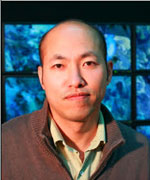
| Title: Inter-Connected Functions for Agile and Economic Service Realizations (Slide) Speaker: Dr. JongWon Kim (GIST, Korea) |
|
 |
Abstract In this talk, we will first review the exploding paradigm shift toward SDI (Software-Defined Infrastructure) that leverages the harmonized orchestration of SDN (Software-Defined Networking), NFV (Network Functions Virtualization), and Cloud Computing technologies. The resulting SDI tied with FastData real-time analytics capability can complete the emerging foundation for Industrial Internet of Things. Next, the agile and economic realizations of diversified services could be enabled by API-driven service function chaining over fully-automated SDI. By orchestrating the Mobile+Cloud service realization with hyper-convergent (i.e., computing/networking/storage combined) SmartX Boxes, we can play with the futuristic abstraction of “Inter-connected VM/Container-based Functions over distributed Boxes”. Bio |
| Title: Open Source Cloud Technology Evolution: Container vs. Virtual Machine Speaker: Dr. Jaesuk Ahn (SKT, Korea) |
|
 |
Abstract In this talk, we will first review recently rising container technology, and explode potential paradigm shift toward SDDC (Software-Defined Data Center) that leverages the harmonized orchestration of Container, Automation, and Cloud Computing technologies. We will compare Container with existing Virtualization technologies to find out similarities as well as differences. Next, how these two technologies will co-exist in cloud computing eco-system. Bio |