



Tutorials
| Tutorial 1: Wednesday, September 23, 2020, 9:00–10:30, Track 1/ROOM 320 Theme: Cyber-Physical Security - A Networking Perspective [Pre-recorded Talk] Chair: Sangheon Pack (Korea Univ., Korea) |
|
|---|---|
| Mr. Kyung-Joon Park (DGIST, South Korea) | |
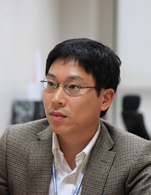 |
Kyung-Joon Park received the B.S. and M.S. degrees in electrical engineering, and the PhD degree in electrical engineering and computer science from Seoul National Univ., Seoul, South Korea, in 1998, 2000, and 2005, respectively. From 2005 to 2006, he was a Senior Engineer with Samsung Electronics, Suwon, South Korea. From 2006 to 2010, he was a Postdoctoral Research Associate with the Department of Computer Science, Univ. of Illinois at Urbana-Champaign (UIUC), IL, USA. He is currently a Professor with the Department of Information and Communication Engineering, Daegu Gyeongbuk Institute of Science and Technology (DGIST), Daegu, South Korea. His research interests include resilient cyber-physical systems and smart production systems. |
| Tutorial 2: Wednesday, September 23, 2020, 9:00–10:30, Track 2/ROOM 321 Theme: From 5G Network Architecture to 5G Core Network Open-Source Project (Free5G) [Pre-recorded Talk] Chair: Chi-Yu Li (National Chiao Tung Univ., Taiwan) |
|
|---|---|
| Mr. Tze-Jie Tan (National Chiao Tung Univ., Taiwan) | |
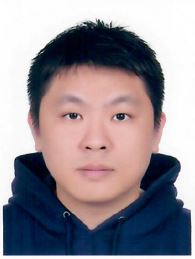 |
Tze-Jie Tan is a PhD student in the Department of Computer Science at National Chiao Tung Univ. (NCTU). He received his master degree in Network Engineering, NCTU. Mr Tan is also a research and development engineer at Industrial Technology Research Institute (ITRI) on data communication and telecommunication appliances. Since 2017, Mr Tan has become a delegate of 3GPP Service and System Aspects Working Group 2 (SA WG2) on contributing technical specifications to 5G architecture and requirements. He is currently the leader of the project free5GC (Rel-15) open-source project. His research interests are in the area of network communication, with a focus on the interworking of non-3GPP access networks and 3GPP access networks.
|
| Tutorial 3: Wednesday, September 23, 2020, 10:45–12:15, Track 1/ROOM 320 Theme: Long-range Low-power Localization for Internet of Things [Pre-recorded Talk] Chair: Sangheon Pack (Korea Univ., Korea) |
|
|---|---|
| Prof. Shibo He (Zhejiang Univ., China) | |
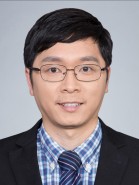 |
Shibo He received the PhD degree in control science and engineering from Zhejiang Univ., in 2012, where he is currently a professor. He was first Post-Doctoral Scholar and then an Associate Research Scientist from May 2012 to May 2014, with Arizona State Univ., Tempe, AZ, USA. From Nov. 2010 to Nov. 2011, he was a Visiting Scholar with the Univ. of Waterloo, Waterloo, ON, Canada. His research interests include the Internet of Things, crowdsensing and big data analysis, etc. He serves/served on the Editorial Board of IEEE TRANSACTIONS ON VEHICULAR TECHNOLOGY, Springer Peer-to-Peer Networking and Application and KSII Transactions on Internet and Information Systems. He served as Symposium Co-chair for GlobeCom 2020, Publication Co-chair for IEEE RTCSA 2019, TPC Co-chair for I-SPAN 2018, Symposium Co-chair for IEEE ICC 2017, Finance and Registration Chair for ACM MobiHoc 2015, TPC Co-chair for IEEE ScalCom 2014, TPC Vice Co-chair for ANT 2013–2014, Track Co-chair for EUSPN 2013. He is a senior member of IEEE.
|
| Tutorial 4: Wednesday, September 23, 2020, 10:45–12:15, Track 2/ROOM 321 Theme: Geolocation-centric Information Platform for Resilient Spatio-temporal Service Management [Live streaming Talk] Chair: Noriaki Kamiyama (Fukuoka Univ., Japan) |
|
|---|---|
| Prof. Kazuya Tsukamoto (Kyushu Institute of Technology, Japan) | |
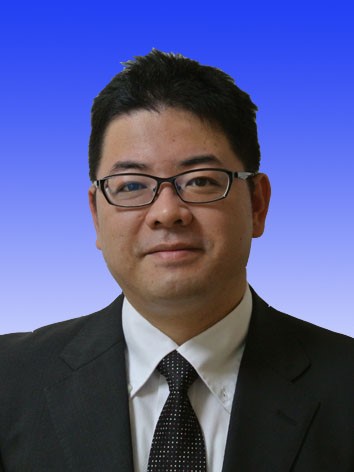 |
Kazuya Tsukamoto received the D.E. degree in computer science from the Kyushu Institute of Technology (KIT), Japan, in 2006. From April 2006, he was a JSPS research fellow at KIT. In 2007, he was an assistant professor in the Department of Computer Science and Electronics, KIT, and then has been an associate professor in the same department since April 2013. His research interests include wireless networks, vehicular networks, IoT, edge computing, and geolocation-based networking. He is a member of the IEEE, the IEICE, and the ACM. He also serves as an associate editor of IEICE Transactions on Communications. |