



General Info
About Korea
- Geography & Location
The Republic of Korea (herein after Korea) is a country visited by more than ten million international travelers every year. With its long history in culture and tradition, the country has a lot to offer to travelers. Continue reading to learn general information about Korea before visiting.
Where is Korea?
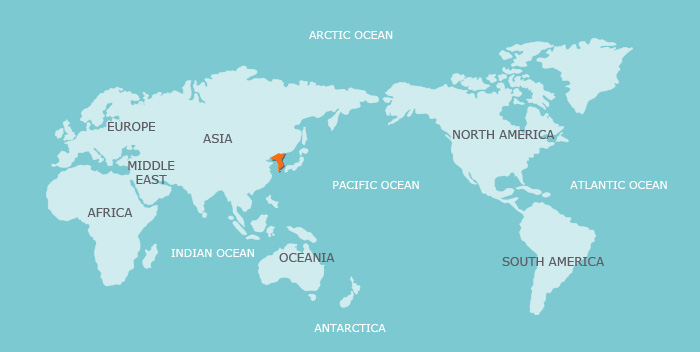
The Korean peninsula is located in Northeast Asia. It is surrounded by the ocean on three sides, making it a unique geographical
location. With Seoul as its capital city, the landsite is roughly 1,030 km (612 miles) long and 175 km (105 miles) wide at its narrowest
point. Korea's total land area is 100,033 square km, neighboring Japan to the east, China to the west, and sharing a northern border
with Democratic People's Republic of Korea (North Korea).
- Population of Korea
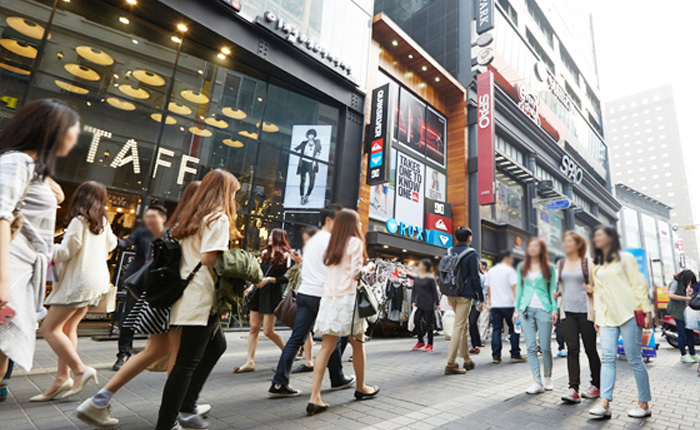
The total population of Korea is approximately 51,634,618 (July 2016 data) with most of them residing in the Seoul metropolitan
area. Outside of Seoul, other large and economically advanced cities such as Busan, Incheon, Daegu, Daejeon, Gwangju and Ulsan
also have higher population densities than other cities in Korea.
About Daegu
- Host City, DAEGU
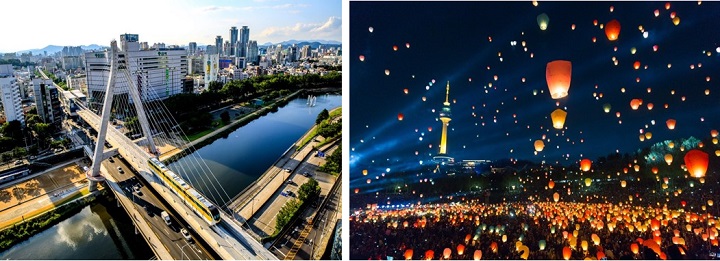
Daegu is a city of living legacy and charm embracing 3,000 years of history. Located in the southeast of the peninsula, it is the
third-largest city in Korea, with a population of approximately 2.5 million. Nestled within wooded mountains and the Gumhogang
river flowing around it, Daegu is an ideal place to convene and relax.
The city is steeped in education, art, culture, and history and has a strong drive for R&D and technological advancement. It is also
located with the presence of 13 UNESCO World Heritage Sites, allowing the city to achieve a distinctive balance between tradition
and technology.
For more information about Daegu, please click here(https://tour.daegu.go.kr/eng/index.do).
Useful Information
Korea's climate is regarded as a continental climate from a temperate standpoint and a monsoon climate from a precipitation standpoint.
The climate of Korea is characterized by four distinct seasons. Spring and autumn are rather short, summer is hot and humid, and winter
is cold and dry with abundant snowfall. Temperatures differ widely from region to region within Korea, with the average being between
6 ℃ (43°F) and 16 ℃ (61°F).

- Time Difference / Business Hours
Korean time is 9 hours ahead of Greenwich Mean Time (GMT+9)
Business hours for banks are generally from 09:30 to 16:30 on weekdays only. Banks are closed on Saturdays, Sundays and public holida-ys. ATMs are widely available. Major department stores are open from 10:30 to 19:30, including Sundays, but smaller shops tend to open earlier and close later every day.
- Electricity
In Korea, electrical outlets are operated at 220 volt only. Overseas delegates bringing laptop computers and other electrical appliances
are advised to check whether a transformer is required